Uncategorised

An Introduction to Metal Oxide Varistors

Metal Oxide Varistors for Surge Protection

How Our Metal Oxide Varistors Are Made

Our MOVs are manufactured from a blend of zinc oxide (ZnO) and other metal oxides. These materials are then pressed and sintered at extreme high temperatures to produce a polycrystalline structure with highly resitive boundaries between the highly conductive ZnO grains. The response voltage of each ZnO grain is approximately 4V, so the varistor voltage is achieved by connecting the grains in series to create a current path.

Electrodes are formed by the deposition of silver to a selected pattern. Some terminations are in the form of  tinned copper wires which are soldered to the electrodes. The device is then coated in a tough epoxy resin which is moisture and flame resistant.
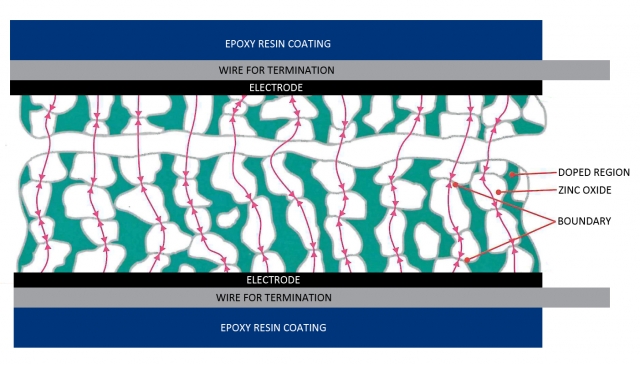
mov makeupZ42.14CW

The electrical perfomance of the MOV is essentially controlled by its physical dimensions:

Current capability by cross-sectional area

Voltage by the varistor thickness

Energy rating by volume

Continuous development ensures improvemnets in the protection level, energy rating, current capability and life.


How The Metal Oxide Varistors (MOVs) Work

The MOV is essentially a back-to-back symmetrical doide with a characteristic similar to that of a Zener diode, A Zener diode is a silicon semiconductor device that permits current to flow in either a forward or reverse direction. The diode consists of a special, heavily doped p-n junction, designed to conduct in the reverse direction when a certain specified voltage is reached. A typical voltage – current characteristic (linear scale) is shown below.

mov V current characteristics

The sharp breakdown characteristic enables the varistor to provide excellent transient suppression performance. In the presence of a voltage transient the impedance of the varistor changes by many orders of magnitude, from a virtual open circuit, where only a few microamps will pass at the maximum operating voltage, to a highly conductive path. This results in the transient being clamped to a safe level and the potentially destructive energy being absorbed in the mass of the varistor, thereby providing protection to vulnerable components. The MOV is capable of responding to the over-voltage within a few nanoseconds.


The Surge Solution

Surge Protection (Over-Voltage Protection) increases the reliability of your electrical equipment that it is being used on, thereby it reduces repair costs and costly out-of-service conditions. These transients can cause a breakdown or malfunction of semiconductors and insulations if not suppress to a safe level.

PD Devices Ltd Metal Oxide Varistors give an all-round standard of protection that other methods cannot claim. There are many ways to supress transients - the traditional CR Circuit - Spark Gaps - Diodes - Crowbars - Silicon Carbide Varistors etc, but none can combine the cumulative advantages of MOVs.

The Advantages of MOVs:

Low Clamping Voltage

Fast Response - Nanoseconds

High Energy Withstand

High Non-Linear Index

Low Leakage (DRAIN) Current (µA)

High Current Withstand

Suitable for AC and DC Circuits

Bipolar Operation

Wide Range of Operating Voltages

Small Size

Low Cost

Customised Solutions
Read more …An Introduction to Metal Oxide Varistors

Customer Testimonials

What Our Customers Say About Us

  • Jamie Newman, CSE

    We only buy Surge Protector Devices from quality assured suppliers. PD Devices have a very friendly and helpful work force.

    I have rated this company for it products and overall service 5 stars out of 5 for both.

  • Arely Amaro, Cummins

    I purchased Z250JS2 Varistors from PD Devices, Monica Elliott-Price dealt with my order and she always gives me great support. 

    We have never had any quality issues with the products from PD Devices.

    I have rated this company for it products and overall service 5 stars out of 5 for both.

  • Alena Lohýnská, BV elektronik, s.r.o.

    I purchased Z500HPRL and Z380HPRL Varistors from PD Devices, I heard about them from one of our customers. Monica Elliott-Price dealt with my order and was very helpful.

    I rated this company for it products and overall service 5 stars out of 5 for both.

  • Pascal Lath, PDU Expert UK Limited

    Surge protection was required from PD Devices as it is one of our key item components for our build, the build and performance of the SPD I rated as 5 stars out of 5 the same as the overall service from this company.

  • Alex Ivens, Batenburg Energietechniek B.V.

    As a company we have been doing business for years and they have very good quality products and I was dealt with by Monica Elliott-Price, she was very helpful.

    I rated this company for it products and overall service 5 stars out of 5 for both.

  • Frank Plukker, Batenburg Energietechniek B.V.

    I purchased Low Voltage Limiters from PD as they the only ones with the knowledge and quality is better, no faults yet. Keep up the good work. Not only great products, but also great personnel.

    I rated this company for it products and overall service 5 stars out of 5 for both.

  • Marcia Gooch, Dorman Smith Switchgear Limited

    A Good solid product, with products to complement our range of LV switchgear, Surge protection becoming highly recommended in the 18th Edition. Good company to deal with, they have been a supplier for many years. Very knowledgeable staff and very helpful Would recommend them as a supplier to anyone.

    I rated this company for it products and overall service 5 stars out of 5 for both.

  • David James, Stechford Mouldings

    I purchased a Varistor Z500PSN/L specified by a customer, PD Devices were an existing supplier. Always found PD Devices responsive & helpful, deliveries on time & in full.

    I rated this company for it products and overall service 5 stars out of 5 for both.

  • Cormac McKibbin, Greenville

    Products: T1SP3/12.5/50/230R / A1SPM/40/230N / T1SP3/12.5/50R / A3SPM/40/230N - Surge / Lightning protection was required for our panel building workshop by the customer / end users. In my 10 years, I have only ever heard of problems with 2 units and therefore performance must be above average. My only thing I would like to add is maybe a larger stock of product would help with supply times.

    I rated this company for it products 5 stars out of 5 and 4 out of 5 for its overall service.

Latest News

Contact Us

PD Devices Ltd
Unit 1, Old Station Yard
South Brent
Devon, TQ10 9AL
United Kingdom
 
VAT Registration: 782 1267 25
Company Registration: 4253515

Follow us

Read more …Customer Testimonials

FAQ's

PD Devices - Frequently Asked Questions

General Questions

  • What do all these acronyms mean when referring to Surge Protective Devices?

    Here are just a few you may of heard of:

    • SPD - Surge Protection Device (The product designed to protect electrical devices from voltage spikes)
    • TVSS - Transient Voltage Surge Suppressor (Replaced by the acronym SPD)
    • MCB - Miniature Circuit Breaker
    • MCCB - Molded Case Circuit Breaker
    • RCBO Residual Current Circuit Breaker with Overload
    • LPS - Lightning Protection System (eg: lightning rod / conductor, earthing wire system, ground rod)
    • MOV - Metal Oxide Varistor (Technology used within some SPD’s)
    • SAD - Silicone Avalanche Diode (Technology used within some SPD’s)
    • GDT - Gas Discharge Tube (Technology used within some SPD’s)
  • What is a Metal Oxide Varistor (MOV)?

    The MOV is a bipolar, non linear resistor, with a symmetrical voltage / current characteristic curve, and a resistance value which decreases as the voltage increases.

    A semi-conducting device which “clamps” the output at a specified voltage

    Advantages:

    •High energy dissipation

    •Fast reaction time (approximately 20ns in circuit)

    •Relatively inexpensive per Joule

    Disadvantages:

    •Degrades with current flow

    •Higher “ON”resistance than SADs

  • What is a Silicon Avalanche Diode (SAD)?

    A SAD is semiconductor diode, which avalanches like a thyristor, and folds back to give less dissipation.

    A device that “clamps” the output at a specified voltage

    Advantages:

    •Very fast reaction time (approximately 5ns in circuit)

    •Very low Clamping Voltage

    •No degradation if not subjected to maximum surge handling capability

    Disadvantages:

    •Relatively more expensive per Joule

  • What is a Gas Discharge Tube (GDT)?

    The GDT is a sealed gas filled spark gap, consisting of two metal electrodes, which are normally spaced by a ceramic or glass insulator

    Advantages:

    •High current handling

    •Crowbar device consisting of a gas chamber that conducts at a specific voltage

    Disadvantages:

    •Crowbar type response is not recommended for AC power applications

    •Slower reaction time

  • What is a Surge or a Spike of power and where does it come from?

    Surges or Spikes of power are rapid changes from the normal operating voltage level, these can come from many different sources;

    From outside:

    Lightning, Transformer switching, Power stations, Sub-stations and distribution faults, Power cross faults (short circuit), Low quality generators….and more

    From inside:

    Office equipment, Unregulated generators, Factory equipment such as Arc Welders, Lifts, Air Conditioning, Elevator drive motors, Photocopiers, Refrigeration equipment….and more

  • So you say Lightning can cause these Power Surges, but how if it didn’t hit my building?

    When there is a cloud to ground lightning strike, the strike point is raised to an extremely high voltage, due to large currents being conducted through the ground, and cables within 2km of the lightning strike can experience an induced surge, and therefore damage can be caused to the equipment within buildings supplied by these cables.

  • Are underground cables protected from lightning?

    Underground cables do offer greater isolation to the effects of lightning when compared to aerial cables; however they are still subject to induced electromagnetic coupling of energy from nearby ground flashes.

    As such, it is good practice to install surge protection on facilities supplied by both, overhead and / or underground, power feeders.

  • Where is the best place to fit surge protection?

    Ideally, protection should always be installed at the main service entrance. This will ensure that externally generated surge energies are routed to earth by the most direct path.

    In larger facilities where distances between this primary protection and the equipment being protected are long, it is also good practice to provide other layers of protection closer to the equipment to be protected.

    Point-of-use protection will provide the maximum level of protection possible.

  • I thought the utilities companies already install SPDs, So why would I want to fit my own?

    The protection the utilities provide is there mainly for personal safety to prevent lightning from migrating in on their wires and causing personal injury and to protect down time and expense on their own equipment.

    When the utilities enter your property, it is not protected and anything they have fitted downstream provides little protection or no protection for your sensitive electronic equipment.

    Phone companies will also add in their network boxes protection again it provides primary protection but does not eliminate the need for secondary protection in your home at the equipment end. If the issue happens within your property this would be your issue and not theirs. 

  • What do I need to consider when thinking of my purchase of SPD’s?

    • Type of building (commercial / industrial / domestic)
    • New Build or a retrofit
    • Type of electrical supply (Single or Three phase)
    • Earthing system in place (TN-C, TN-S, TN-C-S, TT, TN or IT)
    • What is to be protected?

    Building –Type 1 (Class I)

    Electronics –Type 2 (Class II)

    Fine/Sensitive Electronics –Type 3 (Class III)

  • What is meant by distributed protection or a coordinated approach?

    Distributed protection is the process of coordinating protection between the primary service entrance to a large facility and the internal branch distribution panels.

    This is commonly referred to in the industry as layering, or cascading of surge protection. Generally a surge protective device (SPD) with high surge handling capacity is installed at the service entrance while SPDs of lower surge ratings will be installed on the branch panels or dedicated supplies feeding sensitive equipment.

    This coordinating approach can be taken further to include point-of-use SPDs on long lines where they terminate to sensitive or critical equipment.

    A further example of such a distributed protection philosophy might include hardwired SPDs at the main and sub-panels and additional plug-in protectors on select equipment (telephone lines, aerials, socket strips etc).

  • I keep hearing about BS7671, 18th Edition and Surge Protection, but do I really need it?

    There is many factors to this answer really….what are you protecting? is it cost effective?

    So why not look at it like this, “Would you travel without travel insurance?”

    It is not LAW to have travel insurance, but it is very good practice to have it and less costly if something was to go wrong. With this in mind, you will hear people say, “I wouldn’t bother” you will also hear “You must have it!” ….. so who is right?

    In short both, as this is still somewhat of a grey area.

    So what does the standards say, well the main mention of this in the BS7671:18 Wiring Regulations is covered under section 443;

    Protection against transient overvoltages SHALL be provided where the consequence caused

    by  overvoltage could:

    Result in serious injury to or loss of human life

    • Result in interruption of public services and or damage to cultural heritage

    • Result in interruption of commercial or industrial activity

    • Affect a large number of co-located individuals

    For all other installations a risk assessment should be carried out using the calculation method listed in BS7671:2018, except for single dwelling units where the total value of the installation and equipment therein does not justify such protection. 

    NB – if no risk assessment is carried out – Surge Protection measures SHALL be provided 

    Resultant figure from Risk Assessment – 

    <1000 – Surge Protection measures SHALL be provided

    >1000 – No Surge Protection is required  The installation of Surge Protection should then be carried out in accordance with Section 534 of BS7671:2018

    Summary: Do a risk assessment if you don’t then SPD’s SHALL be fitted.

  • So if I have to do a Risk Assessment, how do I do it?

    Calculated Risk Level (CRL) is used to determine if protection against transient overvoltages of atmospheric origin is required. The CRL is found by the following formula:

    CRL = fenv/(LpxNg)

    CRL – is the calculated Risk Level

    fenv – is an environment factor                  

    - Rural and Suburban environment = 85

    - Urban environment = 850

    Lp – is the risk assessment length in km (limited to a maximum of 1km)

    Lp = 2 LPAL + LPCL + 0.4 LPAH + 0.2 LPCH (km)

    Ng – is the lightning ground density (flashes per km2 per year) relevant to the location of the power line and connected structure.

    LPAL is the length (km) of low voltage overhead line

    LPCL is the length (km) of low voltage underground cable

    LPAH is the length (km) of high voltage overhead line

    LPCH is the length (km) of high voltage underground cable

    The total length (LPAL + LPCL + LPAH + LPCH ) is limited to 1km, or by the distance from the first overvoltage protective device installed in the power network to the origin of the electrical installation whichever is the lesser.

    Refer to the Calculation Risk Assessment Method Listed in BS7671:18

  • What are multi-mode SPDs and why do I need L-L (line-to-line) and N-G (neutral-to-ground) protection?

    Multi-mode SPDs have more than one surge protection component with in the one package (For example MOV+GDT) this provides different modes of protection that can be connected.

    This protects against internally generated transients where ground may not be the preferred return path. This can be particularly helpful if the SPD is more than 10 meters (30 feet) from a neutral-to-ground bond.

    A general rule of thumb is that near the service entrance neutral-to-ground bond, you can get away with less modes of protection and the further away you need more modes of protection.

  • Can I protect equipment that operates on dc?

    Protection of equipment connected to direct current (dc) sources or power supplies generally involves installing protection at the alternating current (ac) input to the power supply.

    However, there is a growing need for dc protection when it comes to applications such as telecom. When applying an SPD to a dc bus, the SPD needs to be marked and approved for these types of applications.

  • What about the installation of SPD’s?

    Surge protection devices should be installed as close as possible to the equipment that is being protected. So for example, the closest breaker in a main panel to the main incoming switch. Excessive cabling within an installation will mean that the SPD let through voltage (the voltage that does not get stopped by the arrestor) will be too high for the protection required.

    Ideally the maximum cable length will be no greater than 250mm with an absolute maximum at 500mm.

    For more information go to installation and earthing questions

  • What do I need to know if it is a New build or a Retrofit?

    Are there any spare protective devices available in the board to be protected? (Ideally an MCB/MCCB or Fuse)

    This device will be sized based on the incoming supply with a maximum device size being adhered to (this information is included within the installation documents)

    Example –

    100a supply – 50a MCB

    200a supply – 100a MCCB

    These devices draw hardly any current so the customer has no reason to worry regards finding spare load capacity on the board.

    If there are no spare ways available, then a protective device should be installed alongside the SPD being fitted, this will sometimes consist of an enclosure c/w MCB and SPD inside.

    The protective device acts as a means of isolation as well as a means of protection for the Surge Arrestor.

  • So what is meant by the LPZ ZONES?

    The zones are based on the degree of risk and to provide a method to ensure the protection of the equipment.

    Zone LPZ 0 is outside the structure of the building, and subject to the severest threat of lightning currents and electrical fields.

    Zone LPZ 1 is the first zone within the building and prone to the induced fields and flashover into the building.

    Zone LPZ 2 is the second zone within the building where the risk to electrical equipment is still high.

    Zone LPZ 3 is the third and subsequent areas of diminishing risk to the equipment.

Product Questions

  • When I choose a SPD product is the speed of the response time important?

    Yes and No.

    The ability of an SPD or surge component to respond to a voltage which exceeds its “turn-on” or “clamping” threshold, will govern the residual measured limiting voltage which the downstream equipment will be required to withstand.

    If the device is too slow, the clamping voltage will be high, and the equipment may not be adequately protected. This said, too much is often made of a manufacturer’s “speed-of-response”.

    All SPD components are fast enough. For example, an 0.5 ns response time is much faster than the fastest transients moving at µs speeds.

    What is more important is the “clamping or residual voltage” performance of the SPD. This is limited more by the internal printed circuit board (PCB) traces and the installed surge protections wire length than any individual component’s actual response time.

  • Im not sure if I really need a Type 1 Class I SPD?

    Before that can be decided you need to know whether the mains incoming supply is supplied by an overhead powerline or does it come in via the ground?  

    If your supply is fed via overhead powerlines then the answer is YES you will need a Type 1 (Class I) Device.

    However if it is fed by underground cabling then you will need to find out does the building have an LPS (Lightning Protection System) installed?

    If it is fitted with one then the answer will be YES you will need a Type 1 (Class I) Device. If not then NO it wont. 

    So in short if your build has LPS or fed by an overhead line, then YES you will need a Type 1 (Class I) Device.

  • So as a quick suggestion, what products do PD Devices have for what?

    So a quick SPD Selection could consist of these products

    In the main distribution board and as close to the service entrance as possible, this will probably only be possible after the meter.

    Structural Lightning Protection System (LPS) installed (or overhead mains supply)

    A Type 1 device is fitted Typical to PD Devices T1SP3/25/100/230 for critical buildings – Hospitals, Schools etc.  For less critical buildings T1SP3/12.5/50/230 are recommended. Single phase and Three phase versions are available.

    Structural Lightning Protection System (LPS) and metal services installed

    A Type 1 device similar to the PD Devices Enhanced DSP series can be utilised. Although these are of a lower current impulse they offer an all mode protection

    Without a structural LPS fitted and underground mains supply feed

    A Type 2 device is fitted similar to the PD Devices DSP series or SPM series.  The T1SP devices (as already mentioned) would offer the same levels of protection.

    Critical Equipment  

    Here it is advisable to install Type 3 devices to ensure the protection level is kept to below the recommended 1500 volt.

    The PD Devices DSP series being Type 1, Type 2 and Type 3 can be fitted. In cases where the protection needs to be at the equipment itself then devices similar to the PD Devices MBP Series type of products are advisable.

    Telecommunication and Data Equipment

    These should be protected by additional devices similar to PD Devices TLP and DBP series.

  • Do I get a warranty with my product?

    Yes, there is a 12 month warranty on all products.

    If in the unfortunate event something is wrong with your product, "The Buyer must make a full written claim within 3 days after the time at which the alleged defect is or ought reasonably to have been discovered and, in any event, within 12 months after delivery"

    Full details can be found on our standard conditions of sale

  • Can my business become a supplier of your products?

    Please contact us directly via email: This email address is being protected from spambots. You need JavaScript enabled to view it. and include your business details or alternatively call us directly on +44 (0)1364 649248 

Spec Questions

  • Are “Clamping Voltage” and “Let-through Voltage” the same thing?

    Yes, clamping Voltage is also known as the let-through voltage, this specifies what spike voltage will cause the protective components inside a surge protector to short or clamp. A lower clamping voltage usually indicates better protection, but can sometimes result in a shorter life expectancy for the overall protective system.

  • What do waveforms such as 8/20µs and 10/350µs mean?

    Lightning-induced surge currents are characterized as having very rapid rising “front edges” and long decaying “tails”.

    The first number signifies the time (in microseconds) taken for the surge to reach 90% of its peak value.

    The second number is the time taken for the surge to decay to half of the peak value.

    An 8/20µs wave form represents an indirect lightning strike to a conductor whereas a 10/350µs waveform represents a direct lightning strike.

  • What is meant by MCOV - Maximum Continuous Operating Voltage?

    The maximum continuous operating voltage is the maximum rms voltage that may be continuously applied to the SPD (Surge Protection Device) for each connected mode.

  • What is meant by TOV - Temporary Overvoltages

    Temporary overvoltages are undamped or little damped power-frequency overvoltages of relatively long duration (i.e., seconds, even minutes).

    These overvoltages are typically caused by faults to ground, resonance conditions, load rejection, energisation of unloaded transformers, or a combination of these.

  • What is Nominal Discharge Current Rating (In)?

    Nominal Discharge Current is defined as the peak value of 8/20 microsecond surge current conducted through the SPD.

Installation and Earthing Questions

  • Where should I install Type 1 , Type 2 or Type 3 SPD’s?

    Type 1 (Class I) devices should be used at the incoming point of the electrical supply – these devices, unlike Class 2 units come in different ratings for use on different size LPS (Lightning Protection Systems) installations.

    Type 2 (Class II) devices should be considered for use on downstream sub-distribution boards where damage to sensitive electronics is considered possible.

    Type 3 (Class III)  devices are fine level protection devices that protect extremely sensitive electronics at the point of installation – eg PC’s, Drives, Inverters etc. These can be devices such as Surge protected socket strips, spur protectors etc.

  • What about Earthing?

    Most earthing systems can be dealt with using standard product. The only earthing system that requires specialist SPDs are TT or IT systems. Please contact us if your installation contains this system.

    Type 1 (Class I) devices are ok for all earthing systems.

  • What is Direct Earthing?

    Direct Earthing means the direct connection of all the metal and non-current carrying parts of electrical equipment. Things like a metallic frame work, electrical motor body is connected direct to an earth plate.

  • What does TN, TT and IT systems mean?

    International standard IEC 60364 distinguishes three families of earthing arrangements, using the two-letter codes TN, TT, and IT.

    The first letter indicates the connection between earth and the power-supply equipment (generator or transformer).

    The second letter indicates the connection between earth or network and the electrical device being supplied.

    "T" — Earth connection is by a local direct connection to earth (terre), usually via a ground rod.

    "N" — the neutral connection is supplied by the electricity supply network (neutre), either separately to the protective earth (PE) conductor or combined with the protective earth (PEN) conductor.

    "T" — Earth connection is by a local direct connection to earth (terre), usually via a ground rod.

    "T" — Earth connection is by a local direct connection to earth (terre), usually via a ground rod.

    "I" — No point is connected with earth (isolé), except perhaps via a high impedance.

    "T" — Earth connection is by a local direct connection to earth (terre), usually via a ground rod.

  • So explain to me about the TN earthing system?

    In a TN earthing system, one of the points in the generator or transformer is connected with earth, usually the star point in a three-phase system.

    The body of the electrical device is connected with earth via this earth connection at the transformer. This arrangement is a current standard for residential and industrial electric systems particularly in Europe.

    The conductor that connects the exposed metallic parts of the consumer's electrical installation is called protective earth (PE). The conductor that connects to the star point in a three-phase system, or that carries the return current in a single-phase system, is called neutral (N).

    Three variants of TN systems are distinguished:

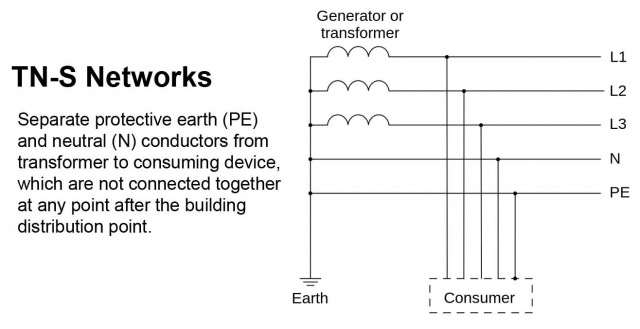
    TN−S - (séparé) (SEPARATE)

    PE and N are separate conductors that are connected together only near the power source.

    TNS Earthing System

    TN−C - (combiné) (COMBINED)

    A combined PEN conductor fulfils the functions of both a PE and an N conductor.

    (on 230/400v systems normally only used for distribution networks)

    TNC Earthing System

    TN−C−S - (combiné et séparé(COMBINED & SEPARATE)

    Part of the system uses a combined PEN conductor, which is at some point split up into separate PE and N lines. The combined PEN conductor typically occurs between the substation and the entry point into the building, and earth and neutral are separated in the service head.

    TNCS Earthing System

  • What is a TT earthing system?

    In a TT (terre-terre) earthing system, the protective earth connection for the consumer is provided by a local earth electrode, (sometimes referred to as the Terra-Firma connection) and there is another independently installed at the generator. There is no 'earth wire' between the two. The fault loop impedance is higher, and unless the electrode impedance is very low indeed, a TT installation should always have an RCD (GFCI) as its first isolator.

    TT Earthing System

    The big advantage of the TT earthing system is the reduced conducted interference from other users' connected equipment. TT has always been preferable for special applications like telecommunication sites that benefit from the interference-free earthing. Also, TT networks do not pose any serious risks in the case of a broken neutral. In addition, in locations where power is distributed overhead, earth conductors are not at risk of becoming live should any overhead distribution conductor be fractured by, say, a fallen tree or branch.

    In pre-RCD era, the TT earthing system was unattractive for general use because of the difficulty of arranging reliable automatic disconnection (ADS) in the case of a line-to-PE short circuit (in comparison with TN systems, where the same breaker or fuse will operate for either L-N or L-PE faults). But as residual current devices mitigate this disadvantage, the TT earthing system has become much more attractive providing that all AC power circuits are RCD-protected.

    In some countries (such as the UK) it is recommended for situations where a low impedance equipotential zone is impractical to maintain by bonding, where there is significant outdoor wiring, such as supplies to mobile homes and some agricultural settings, or where a high fault current could pose other dangers, such as at fuel depots or marinas.

    The TT earthing system is used throughout Japan, with RCD units in most industrial settings. This can impose added requirements on variable frequency drives and switched-mode power supplies which often have substantial filters passing high frequency noise to the ground conductor.

  • So how does the IT earthing system compare to the others?

    The IT network (isolé-terre), the electrical distribution system has no connection to earth at all, or it has only a high impedance connection.

  • I seem to have TN-S and TN-C-S supplies from the same transformer?

    Yes, this is possible to have both TN-S and TN-C-S supplies taken from the same transformer.

    For example, the sheaths on some underground cables corrode and stop providing good earth connections, and so homes where high resistance "bad earths" are found may be converted to TN-C-S.

    This is only possible on a network when the neutral is suitably robust against failure, and conversion is not always possible.

    The PEN must be suitably reinforced against failure, as an open circuit PEN can impress full phase voltage on any exposed metal connected to the system earth downstream of the break. The alternative is to provide a local earth and convert to TT.

    The main attraction of a TN network is the low impedance earth path allows easy automatic disconnection (ADS) on a high current circuit in the case of a line-to-PE short circuit as the same breaker or fuse will operate for either L-N or L-PE faults, and an RCD is not needed to detect earth faults.

  • What is meant by a PME Supply?

    A TN-C-S system is a PME supply and stands for "Protective Multiple Earthing"

    It means that the neutral conductor is deliberately connected to earth at a number of points on the supply network.

Other Questions

  • Is it true that lightning does strike the same place twice?

    To be honest lightning often strikes the same place more than twice, sometimes repeatedly, especially if it's a tall.

    • The Empire State Building is hit an average of 23 times a year
    • The Eiffel Tower is hit about 10 times a year
    • On average, the CN Tower is stuck by lightning 75 times per year

    So it depends on where you are, how prone the area is to lightning, many different factors.

    Lightning will USUALLY strike the tallest object in the area. It makes sense that the tallest object is most attractive, because it is the easiest path for the lightning to take to ground.

  • What is meant by bonding?

    Bonding is used to reduce the risk of electric shocks to anyone who may touch two separate metal parts when there is a fault somewhere in the supply of electrical installation.

    By connecting bonding conductors between particular parts, it reduces the voltage there might have been.

    The types of bonding generally used are main bonding and supplementary bonding.

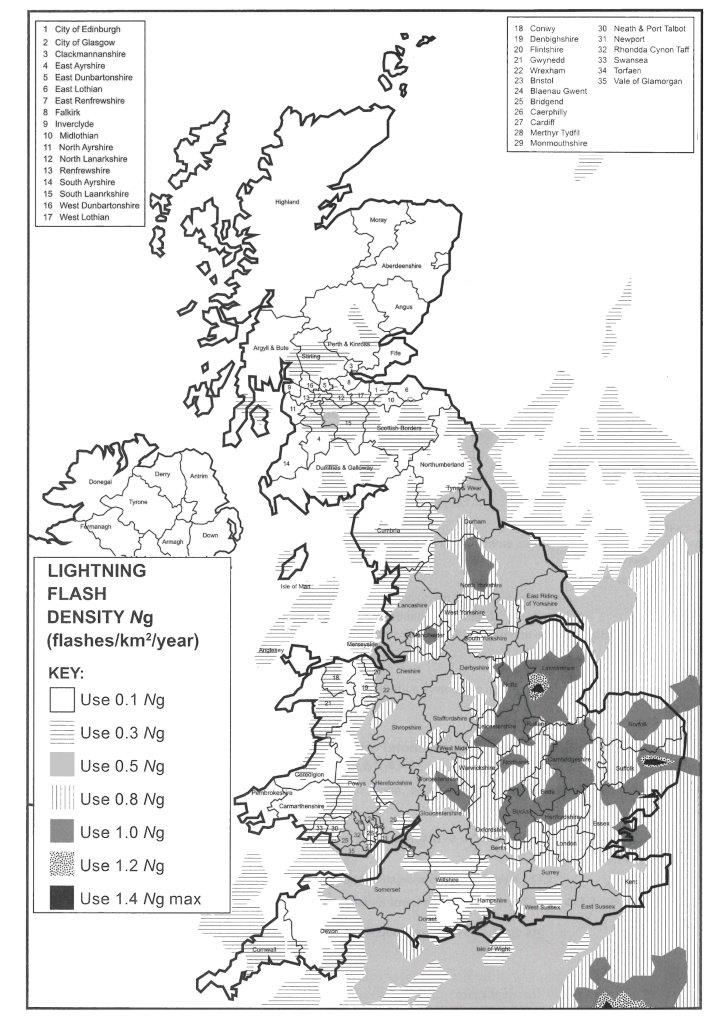
  • I live in a area where there is not much lightning, do I need surge protection?

    Many areas of the country and even the world do not experience as many lightning-related problems as others.

    However this is only based on previous data and is only a guide to assist you with your Calculated Risk Level (CRL)

    flash density map

    Calculated Risk Level (CRL) is used to determine if protection against transient overvoltages of atmospheric origin is required.

    The CRL is found by the following formula:

    CRL = fenv/(Lx Ng)

    CRL – is the calculated Risk Level

    fenv – is an environment factor  

    • Rural and Suburban environment = 85
    • Urban environment = 850

    Lp – is the risk assessment length in km (limited to a maximum of 1km)

    Lp = 2 LPAL + LPCL + 0.4 LPAH + 0.2 LPCH (km)

    Ng – is the lightning ground density (flashes per km2 per year) relevant to the location of the power line and connected structure

    LPAL is the length (km) of low voltage overhead line

    LPCL is the length (km) of low voltage underground cable

    LPAH is the length (km) of high voltage overhead line

    LPCH is the length (km) of high voltage underground cable

  • I am little concerned that this is going to cost me a small fortune?

    This is something you need to look at in great detail, what are you trying to protect and how much protection you require to protect said electronics.

    Set aside the budget you wish to spend and ask how we can help you, at least we could advise you accordingly. 

    Only you will know if you have done your risk assessment what you will need to conform to the standards.

    It would not be cost effective to spend hundreds on SPDs when the only electronic item you have in the building is a kettle, but if you have PCs, Smart TVs, Alarm & CCTV systems and expensive electronic equipment in your building then this would be a small price to pay.

    Remember some insurance policies will become cheaper with SPDs fitted to your build, so this is effectively of setting the cost from a yearly fee to a one off payment, thus saving you money and your equipment in the future. (Remember to always ask this question when paying for your insurance)

    Fitting surge protection does not have to cost you a fortune, but without it you could face having to replace your equipment sooner than you thought. As even small surges and transient spikes can prematurely end your electronics lives.

  • I bought a new TV and they gave me a Surge Protected Strip, so my TV is protected right?

    Yes and No is the answer, so let me explain.

    The surge protected strips that you get from the shops are usually ok for your equipment, but this is only a Type 3 protection and is ONLY protecting what is actually plugged in to that socket strip.

    These extension leads / socket strips are very good but remember if the equipment is connected to anything else via a cable or a coax like a TV then this is enough way the surge could destroy your equipment,.

    So for an example a PC connected to a socket strip would be safe if connected via Wifi to the internet, but if your PC is connected to the internet via an ethernet cable attached to it then the phone line would also need protection.

    See: Data Networks & Telecoms

  • I am trying to understand some of the wording used, do you have any definitions?

    Live - Active (there is electricity).

    Current - Flowing electricity charge.

    Voltage - The force of electricity.

    Conductors - Wires that carry electricity.

    Earth - A connection to the ground.

    Earthing - A way of preventing electric shocks.

    Main earthing terminal - Where earthing and bonding conductors are connected together.

    Electrical installation - a fixed wiring system.

    Consumer Unit - A fusebox that is used to control and give out electricity around the home. It usually contains a main switch, fuses or circuit-breakers and one or more residual current devices (RCDs).

    (RCDs) Residual current devices - A sensitive switching device that trips a circuit when it finds an earth fault.

    Bonding - A way of reducing the risk of getting an electric shock.

    Main bonding - Green and yellow conductors that connect metal pipes (gas, water or oil) from inside a building to the main earthing terminal of the electrical installation. Main bonding connections may also be made outside the building, for example where a semi-enclosed gas meter box is installed outside and it is not possible to install a bond to the gas installation pipework indoors.

    Supplementary bonding - Green and yellow conductors that connect accessible metal parts of electrical equipment (such as a heated towel rail) to accesible metal parts of items of electrical equipment and/or accessible metal parts of items that are not electrical (such as pipes).

    These connections are made to prevent a dangerous voltage between two accessible metal parts, in case there is a fault. You may need supplementary bonding for rooms containing a bath or shower, except where all circuits in the room are RCD protected and the main bonding is up to the required standard.

Latest News

Contact Us

PD Devices Ltd
Unit 1, Old Station Yard
South Brent
Devon, TQ10 9AL
United Kingdom
 
VAT Registration: 782 1267 25
Company Registration: 4253515

Follow us

Read more …FAQ's

PiDelta Test Services

PiDelta Test Services

Product Testing Services

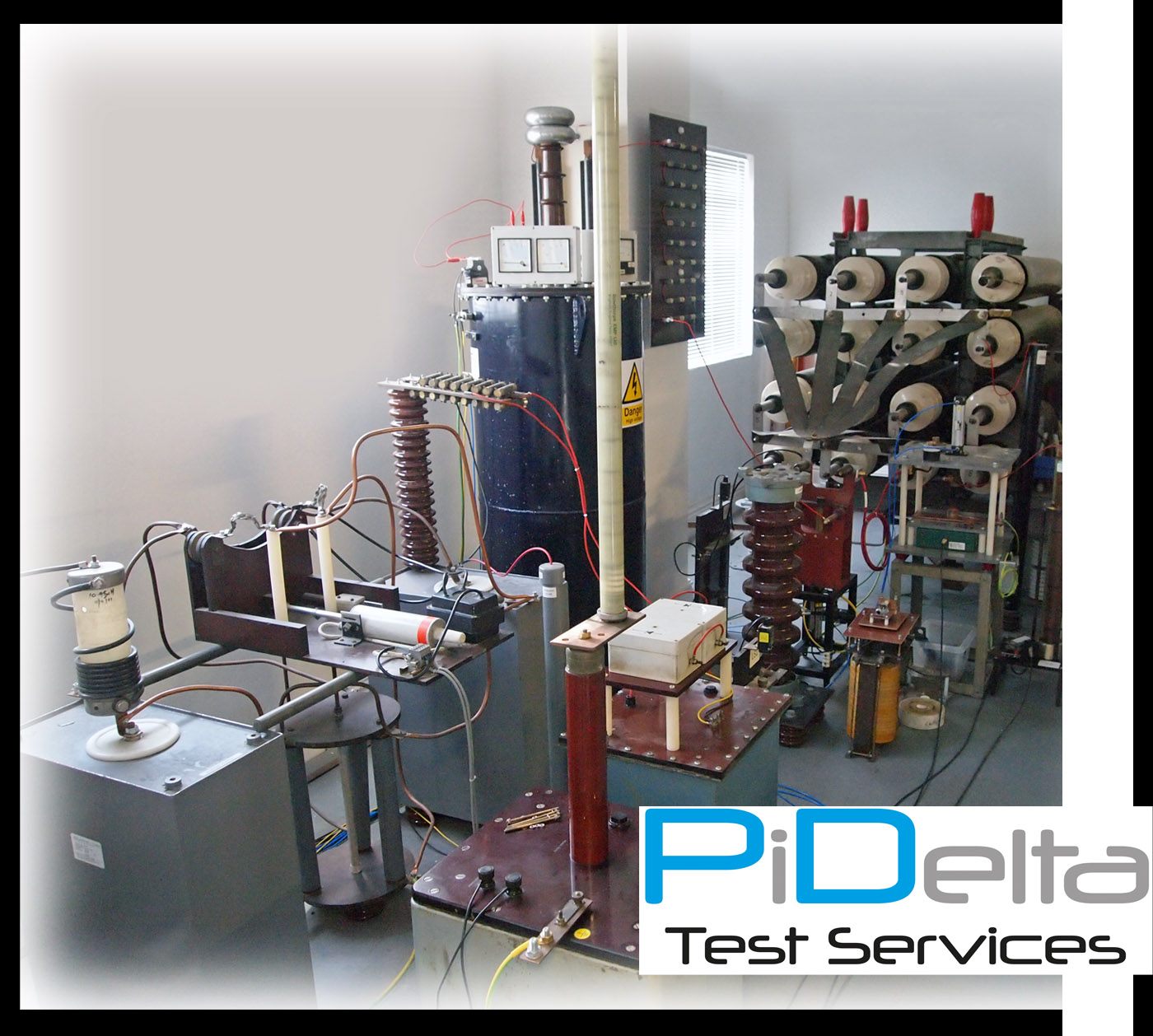
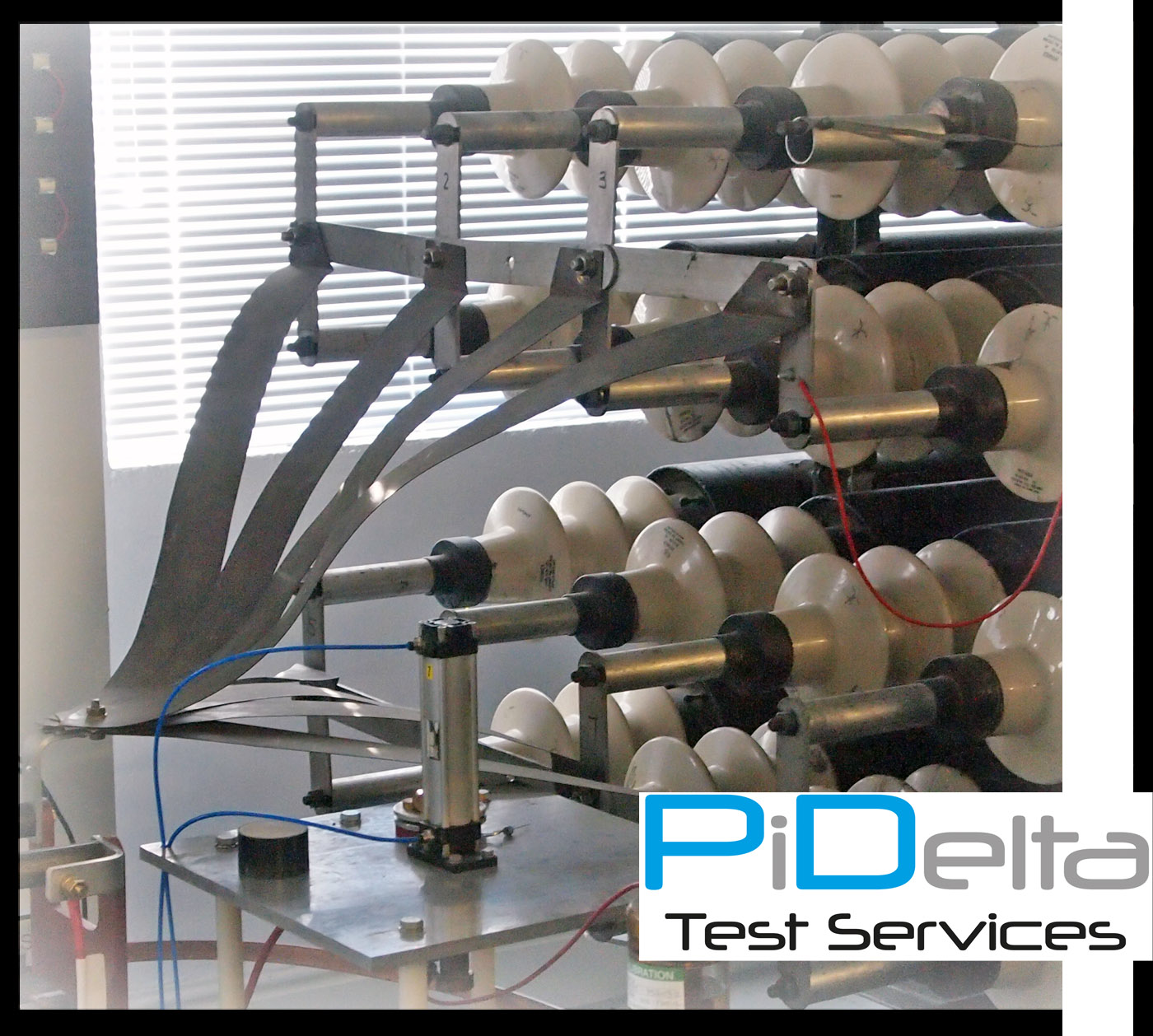
PiDelta Test Services is a BS EN ISO/IEC 17025 accredited division of PD Devices Ltd and is qualified to provide a range of Electrical, Mechanical and Environmental tests across a variety of business sectors. 

Our current scope includes the following:

Electrical testing (typical applications - Surge Protection Devices)

Long term stability under continuous operating voltage - Clause 8.4 of BS EN 60099-4:2014, Metal-Oxide Surge Arresters without Gaps for AC Systems

Class I Operating duty - BS EN 61643-11:2012+A11:2018 Clause 8.3.4.3

Class I additional duty - BS EN 61643-11:2012+A11:2018 Clause 8.3.3.4

High Current (4/10Us) - Clause 8.7 of BS EN 60099-4:2014, Metal-Oxide Surge Arresters without Gaps for AC Systems

Charge Transfer (rectangular wave) - Clause 8.5 of BS EN 60099-4:2014, Metal-Oxide Surge Arresters without Gaps for AC Systems

Reference Voltage (100V to 3.3kV, 1mA to 10mA) - By application of known DC currents and measurement of the resulting voltages

Energy withstand (peak current 1000A) - Applied rectangular pulses over the range 2 ms to 3 ms

Contact resistance - BS EN 62561-1:2017 clause 6.4.a

Resistivity - BS EN IEC 62561-2:2018 Clauses 5.2.1.1 and 5.2.5.2 

Physical/Mechanical testing (typical applications - Lightning Protection System LPS components)

Loosening torque - BS EN 62561-1:2017 clause 6.4.c

Coating thickness - BS EN IEC 62561-2:2018 Clauses 5.2.2.1 & 5.2.2.2

Static mechanical - BS EN 62561-1:2017 clause 6.5.2

Environmental testing (typical applications - Lightning Protection System LPS components)   

Salt Mist Spray : BS EN IEC 62561 Parts 1, 2 and 4 (for LPS components) – referencing the generic standards BS EN IEC 60068-2-11:2021 ‘Test Ka Salt Mist Cyclic’ and BS EN IEC 60068-2-52:2018 ‘Test Kb Salt Mist Cyclic’.  

Humid Sulphurous Atmosphere : BS EN IEC 62561 Parts 1, 2 and 4 – referencing the generic standard BS EN ISO6988:1995 ‘Metallic and other non-organic coatings – Sulphur Dioxide test with general condensation of moisture.’

Bespoke test procedures may be developed and implemented, where possible, with client consultation.

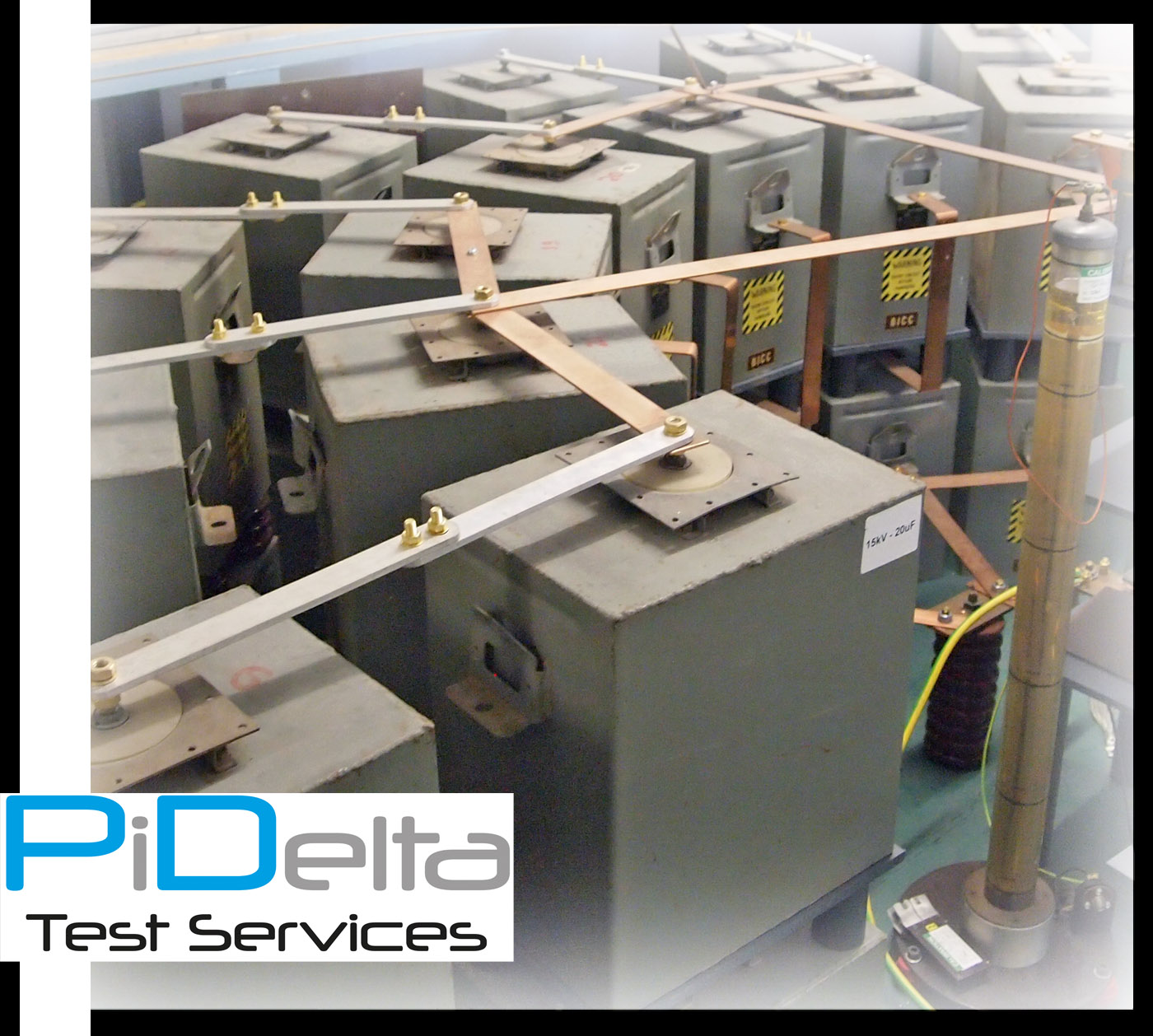
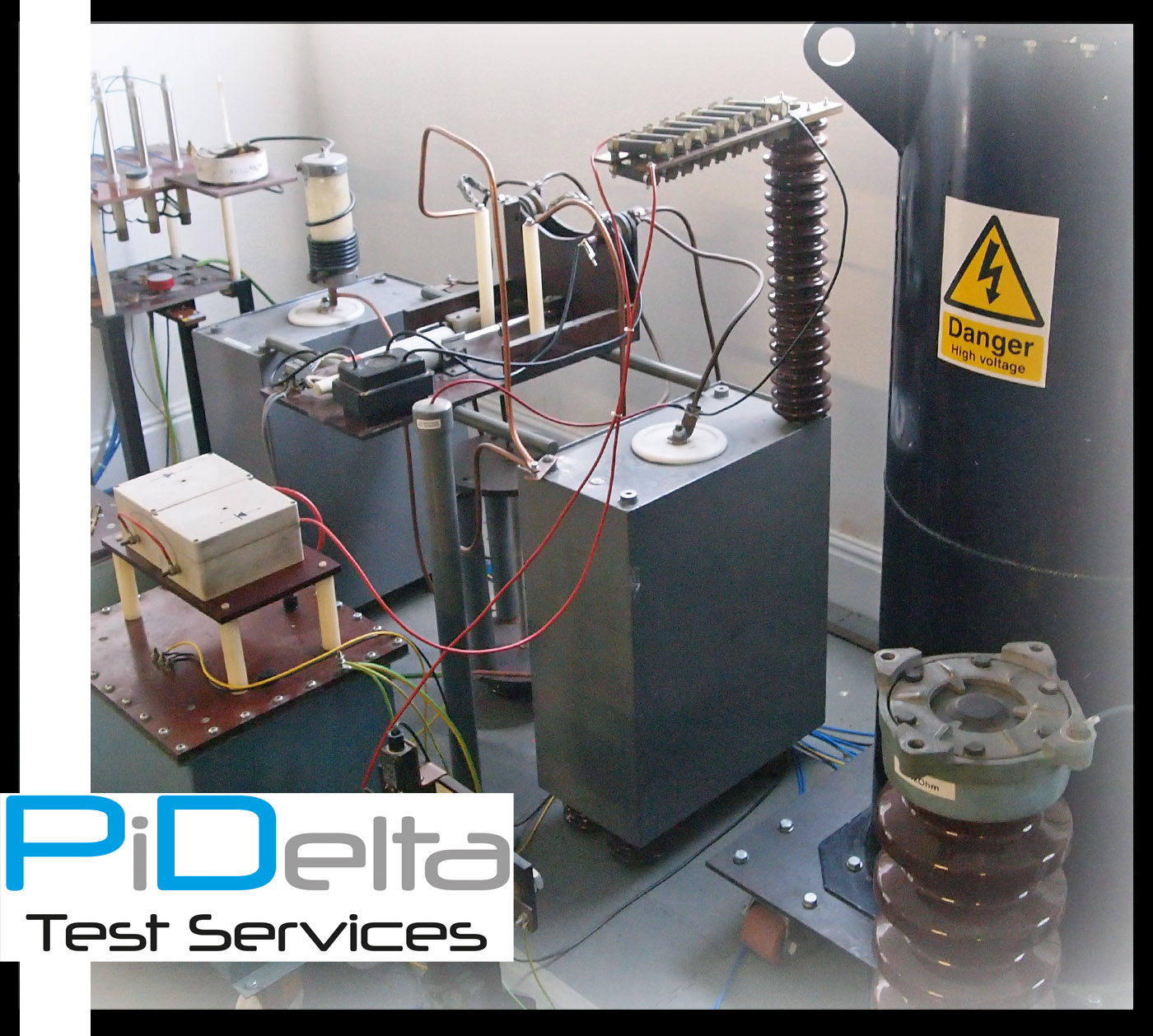
Test lab capacitor bank Test lab energy testing Pi Delta Test Spark Test lab equipment Test lab capacitors

Latest News

Contact Us

PD Devices Ltd
Unit 1, Old Station Yard
South Brent
Devon, TQ10 9AL
United Kingdom
 
VAT Registration: 782 1267 25
Company Registration: 4253515

Follow us

Read more …PiDelta Test Services

Contact

Contact PD Devices Ltd

Thank you for visiting our website.

We would love to hear from you, whether you’d like to ask a question, give feedback on our website or make an enquiry then please get in touch by using the contact form.

  • PD Devices Ltd
    Unit 1-2
    Old Station Yard
    South Brent
    Devon
    TQ10 9AL
    United Kingdom
     
    VAT Registration: 782 1267 25
    Company Registration: 4253515
  • This email address is being protected from spambots. You need JavaScript enabled to view it.

  • Tel: +44 (0)1364 649248

50.4280,-3.8354

PD Devices Ltd
Unit 1
Old Station Yard
South Brent
Devon
TQ10 9AL

Read more …Contact

More Articles …

Sitemap | Products | Services

Copyright © 2026 PD Devices Ltd | Company Reg: 4253515 | VAT Reg: 782 1267 25

UK manufacturers of lightning and surge protection devices. Suppliers of transient overvoltage and switching surge solutions.

Digital Engineering & Technical SEO — Swanky Pixels